
Heat rejection for big glass
Solar Control Window Film for Tampa Commercial Buildings
On a commercial building in Tampa, the glass is usually the largest source of unwanted heat. Solar control film turns a share of that sun away at the pane, which lowers cooling loads and makes sunny elevations usable without replacing the curtain wall.
 Tampa
Solar Control Film for Tampa's Commercial Glass Stock
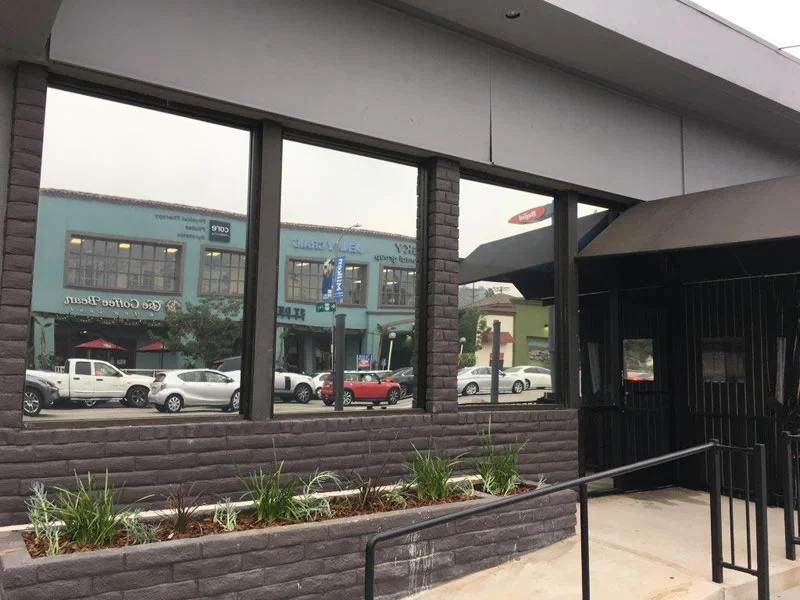
Tampa's commercial buildings span several generations of glass. Older low-rise offices and retail centers from the 1970s and 1980s often have single-pane tinted glass in bronze or gray. Many Westshore and downtown towers from the 1980s and 1990s have reflective or tinted insulated units. Newer towers on Water Street and in the Channel District have clearer high-performance low-E glass. Each takes film differently.
Single-pane tinted glass usually accepts solar film well and gains the most from it. Insulated units need a film approved for that glass so the outer pane does not overheat. Modern low-E glass already rejects much of the infrared, so film there is usually about glare or reaching a specific comfort goal rather than large heat reductions.
Thermal Stress Checks Before Solar Film Goes On
Every piece of glass absorbs some solar energy. Adding film increases how much the glass absorbs, and that raises its temperature. If the center of the pane gets much hotter than the edges, which stay cool inside the frame, the glass can crack. Large insulated units, tinted glass and panes partly shaded by overhangs or columns are the most sensitive.
Before proposing a film, we identify the glass type, thickness and makeup, look at shading patterns on each elevation, and check the film maker's published compatibility guidance. On complex curtain walls we may ask for the original glazing specification or consult with the building engineer. Film approved for the glass carries the film maker's glass coverage in addition to the film warranty.
Solar Control Film for Tampa Hotels, Warehouses and Schools
Hotels near Tampa International Airport, in Westshore and along the waterfront in Clearwater Beach and downtown St. Petersburg have rows of guest rooms with west and south glass. Solar film keeps rooms comfortable when guests return in the afternoon and reduces the load on individual room units. Lobbies with tall glass walls benefit as well.
Warehouse and flex buildings near Port Tampa Bay, along I-4 and in the industrial areas east of downtown usually have a glass office front facing the street. Those offices are small, but they run hot because the building's main cooling system is not designed for them. Schools and county buildings with older single-pane glass are another common fit, often scheduled during summer break.
- Multi-tenant office towers and low-rise office parks
- Hotel guest rooms and lobbies
- Warehouse and flex building office fronts
- Schools, libraries and county buildings
- Medical office buildings and outpatient centers
Interior Versus Exterior Solar Control Film
Most solar film goes on the room side of the pane, sheltered from rain and wind, which is why it lasts longest there. Exterior films are sometimes used when interior access is impractical, when the glass is an insulated unit that should not absorb more heat from an interior film, or when the goal is to stop heat before it enters the glass at all.
Exterior films face direct sun, rain and, near the bay or Gulf, salt air, so they have a shorter service life. Access also matters: high exterior glass requires lifts or rope access. We recommend exterior film only when it clearly performs better or interior installation is not possible.
Solar Film, Building Appearance and Tenant Approval
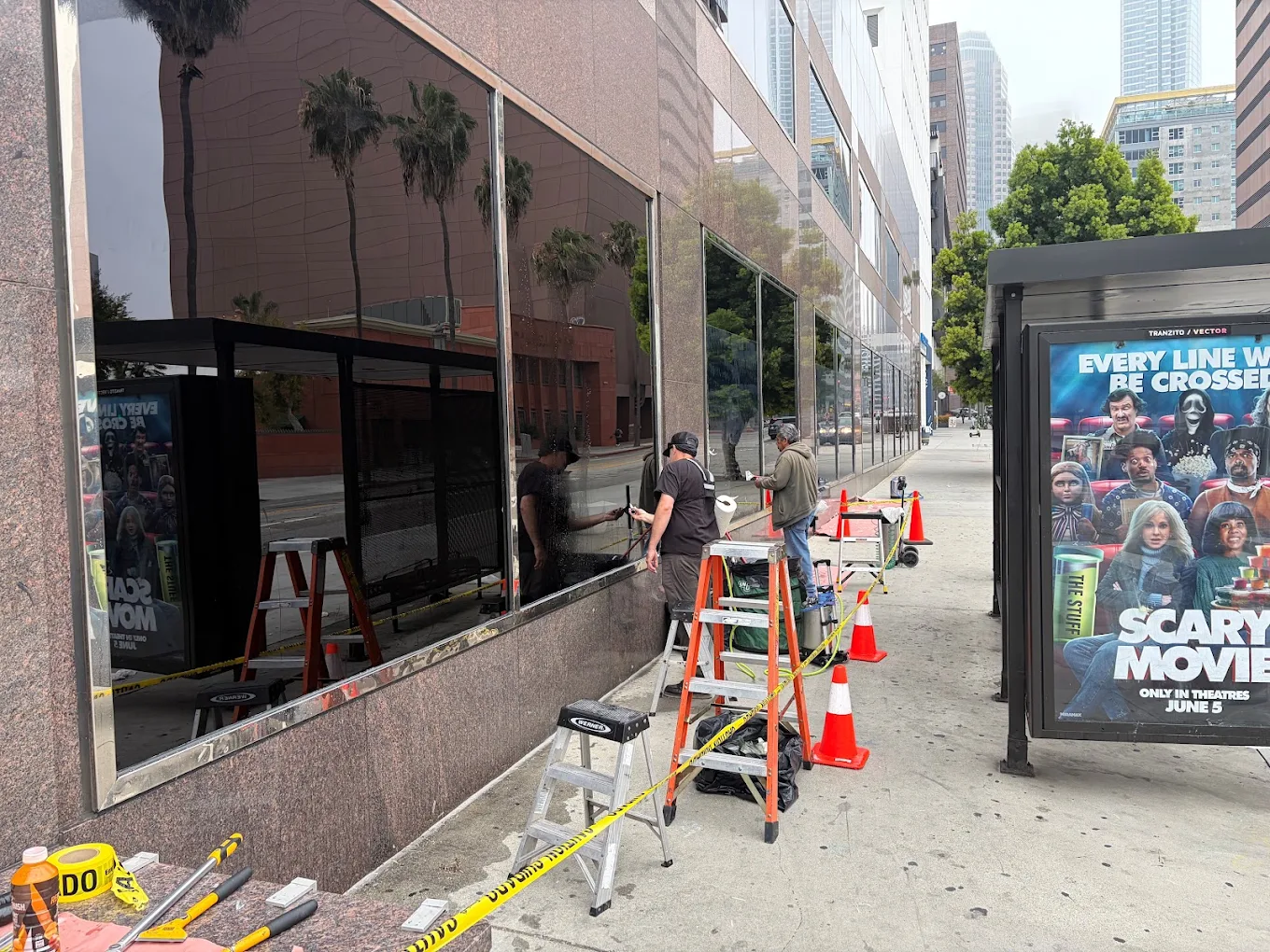
Solar control films range from nearly clear to strongly reflective. Many Tampa office buildings already have a reflective look, and owners want new film to match. Others want the clearest possible glass. Film changes how glass reads from outside, especially at different times of day, so we provide mock-ups on actual panes before committing to a whole elevation.
In multi-tenant buildings, the owner usually picks one film for the exterior look and tenants follow that standard. Partial installs on a single floor should be checked for appearance from the street. A mismatched floor can be obvious on a reflective tower, so we plan film choices with the building as a whole in mind.
Solar Control Film Benefits for Tampa Commercial Buildings
Reduced Solar Heat Gain on Sunny Elevations
Solar film turns back part of the sun's energy before it gets into the building, lowering cooling demand on west and south elevations that drive afternoon peaks in Tampa commercial buildings.
Glare Control for Building Occupants
Lower visible light transmission cuts glare on screens and work surfaces, letting occupants keep blinds open and use daylight instead of fighting it.
Solar Window Film Instead of Reglazing
Film improves existing glass without the cost, permits and disruption of replacing curtain walls or storefronts, which makes it practical for buildings mid-way through their life cycle.
Uniform Facade Appearance With Solar Film
Matched film across elevations keeps a consistent look from the street, which matters for multi-tenant buildings, hotels and branded retail.
Tampa Building Owner Questions About Solar Control Film
Can solar film crack commercial glass?
It can if the wrong film is used on sensitive glass. We check the glass makeup, shading and the film maker's compatibility data before recommending a product, which keeps that risk low.
Will solar film change how our building looks?
Some films barely change the appearance; reflective films change it more. We install mock-ups on actual panes so owners can see the result before approving a full elevation.
Is exterior film better than interior film?
Interior is the usual pick: it outlasts exterior film and goes on without lifts or rope access. Exterior film is used in specific cases, such as some insulated units or when interior access is blocked.
Can film be installed in an occupied hotel?
Yes. Hotel installs are scheduled room by room or floor by floor around occupancy, with minimal disruption to guests.
Do you provide performance data for engineers?
Yes. We supply the film maker's published solar heat gain, visible light and UV figures, and can coordinate with your engineer or energy consultant.
Window film quote
Tampa Solar Control Film Scope and Pricing
Send the building address and the elevations or floors with heat and glare problems through the quote form, noting whether glazing specifications or drawings are on hand. We will reply with film recommendations and a proposal, collecting those documents as we scope it.